
Bryan Johnson
Built a fintech fortune, then bet it all on the ultimate hack: cheating death. Today he's proving human limits are just code waiting to be cracked.
 Los Angeles County, USA


Interests






Bio
Bryan has never been content with the limits of biology – his own or humanity’s. After selling his payments company Braintree to PayPal for $800m in 2013, he could have taken the typical founder route: investing, relaxing, staying safely on the sidelines. Instead, he began preparing for a world where humans and machines think together, launching Kernel in 2016 with $100m of his own capital to build non-invasive brain-computer interfaces.
That leap wasn’t just technical. It was personal.
“I don’t believe I’ll die,” Bryan told an interviewer in 2025, referring to his now-famous anti-ageing regime, Project Blueprint – a meticulous protocol of 100+ daily supplements, strict caloric intake, sleep monitoring and full-body scans, all guided by algorithmic decision-making. At first glance, that might sound like a midlife crisis with a budget. But for Bryan, it’s part of the same arc: extending the bounds of human potential using tools we’ve only just begun to master.
Born in Provo, Utah in 1977 and raised in a conservative Mormon household, Bryan's early life revolved around religious commitment and entrepreneurial experimentation. He sold mobile phones door-to-door to fund his education and later earned an MBA from the University of Chicago Booth School of Business.
In 2007, he founded Braintree, an online payments company that quietly powered the early days of Uber, Airbnb and GitHub. When PayPal acquired Braintree in 2013, Bryan reportedly netted around $300m personally. Rather than retire, he launched OS Fund in 2014 – a $100m personal investment vehicle focused on biotech, AI, genomics and space, backing bold science with long-term timelines.
But Kernel was the bigger bet. While brain-computer interfaces were still largely science fiction or invasive (think Elon Musk’s Neuralink), Bryan believed real progress required measuring brain activity with precision without opening the skull. Kernel's two devices, Flow and Flux, debuted in 2020 and offer non-invasive neural recording tools to measure emotion, cognition and mental health in real time.
He sees it as a first step towards "high-bandwidth" communication between humans and machines. The aim? Not just treating mental illness, but evolving human intelligence altogether. For Bryan, this means giving humanity a new kind of self-awareness – creating tools that can reflect our internal mental processes back to us with scientific clarity, much like holding up a mirror to the mind.
Parallel to Kernel, Bryan became globally known for Project Blueprint, a live experiment in radical health optimisation. As of 2024, he reportedly spends over $2m (£1.5m) a year on anti-ageing protocols, regularly measuring over 70 organs and claiming to have the heart of a 37-year-old, the skin of a 28-year-old and the lung capacity of an 18-year-old – despite being nearly 50. His routines include nightly LED light facials, gene therapy trials, and blood plasma exchange with his teenage son – a controversial detail that made headlines and raised ethical questions around the extremes of longevity science.
His approach invites scrutiny, but for Bryan, that discomfort is the point. “I want to be the most measured human in history,” he said in an interview, describing his body as a data project, not a belief system. What some view as ego, he insists is simply iteration: a founder mindset applied to the self.
Alongside his technical ventures, Bryan has become a public provocateur – questioning the inevitability of death, pushing for AI-human collaboration, and sharing daily health data online. He’s written publicly about the failings of traditional healthcare, the importance of open science, and the need to make inner space as explorable as outer space.
Notably, Bryan isn’t part of Silicon Valley’s usual club. He lives in Los Angeles, and has taken a deliberately outsider approach – embracing public curiosity, scepticism, and even mockery as signs that he’s early, not wrong.
In 2025, Netflix released a documentary titled Don’t Die: The Man Who Wants to Live Forever, capturing the contradictions of his mission – technologist and mystic, quantifier and idealist, outsider and outlier.
Where others optimise for valuation or influence, Bryan seems to be optimising for legacy – not in a reputational sense, but as a biological experiment in staying alive long enough to see what’s next.
He’s not interested in ageing gracefully. He’s intent on challenging it – methodically, publicly, and on his own terms.
Impact
$800M
Exit value


45+
Countries Operated In
50+
Early stage investments


200+
People employed

$120M+
Funding raised
6
Sectors disrupted


5
Companies Co-founded
Life Story
Born in Provo, Utah
Bryan was born on 22 August 1977 in Provo, Utah, and raised in nearby Springville. He is a middle child with three brothers and a sister. His parents divorced when he was young, and he moved in with his mother and stepfather, who owned a trucking company
World Map
Utah, USA
US
Bryan was born in Provo, Utah, in 1977 and spent his early life nearby in Springville. He studied at Brigham Young University and later returned to Utah throughout his entrepreneurial journey.
Press
Business Today
Bryan Johnson’s $2M anti-aging plan starts with cutting these toxic...
8th October 2025

WIRED
Watch Our Livestream Replay: Inside Katie Drummond’s Viral Intervie...
25th July 2025

Fortune
Bryan Johnson is hiring a CEO for his company, Blueprint, so he can focus on living forever: 'I don't need the money'
24th July 2025
Business Insider
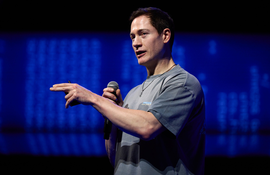
Longevity enthusiast Bryan Johnson says he doesn't want to run his antiaging company anymore
23rd July 2025
WIRED
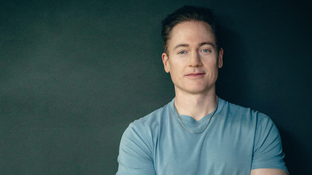
Watch Bryan Johnson Wants To Live Forever | The Big Interview
21st July 2025
WIRED
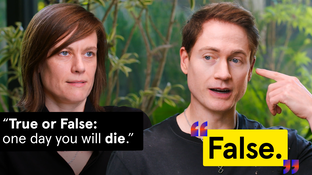
Bryan Johnson Is Going to Die
21st July 2025

Sifted
Longevity guru Bryan Johnson: ‘Instead of 996, I would suggest 811’
11th June 2025

TechCrunch
Anti-aging zealot Bryan Johnson wants to start ‘foodome sequencing’
13th March 2025
Business Insider
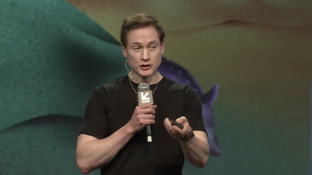
Longevity guru Bryan Johnson had a Super Bowl spread with berries, not Buffalo wings
10th February 2025

Green Queen Media
Netflix Explores Biohacker's $2M-A-Year Quest to Live Forever – His Diet? Plants
13th December 2024

Media
Career Milestones

Don't Die Certified
A wellness certification launched by Bryan Johnson to recognise individuals who follow Blueprint protocols and commit to data-driven, longevity-focused living.

2025 – Present
Don't Die
A longevity movement and event series created by Bryan Johnson, blending wellness, data, and futurism to challenge the inevitability of ageing.
2023 – Present

Blueprint
A self-optimisation protocol developed by Bryan Johnson, combining strict routines, biomarker tracking and over 100 daily supplements to slow biological ageing and enhance healthspan.
2021 – Present

Kernel
Kernel is a neurotechnology company that develops non-invasive brain interface technologies to measure brain activity and function, with the goal of advancing treatment development and improving patient outcomes.
2016 – Present

OS Fund
A $100 million science-focused fund backing breakthrough ventures in biotech, AI, genomics and space, launched in 2014.
2013 – Present

Braintree
A payments platform founded by Bryan Johnson in 2007, powering early transactions for Airbnb, Uber and GitHub. Acquired by PayPal for $800 million in 2013.
2007 – 2013
Early Stage Investments
Philanthropy

Bryan Johnson Foundation
A private foundation supporting K–12 education and science initiatives, with modest grants aimed at engaging youth in innovation and big challenges.

 Supports kids in grades K–12
 Project-based STEM learning
 Mentorship for young people2016 – Present
 Alexandria, Virginia
Founders Brands Limited
180 Strand, 2 Arundel Street, London,
United Kingdom, WC2R 3DA
Company number: 15716753
VAT number: 487 5152 58
© 2025 Founders File