
 All Posts
Last updated on October 13, 2026
Every year, Founders Forum Global brings together some of the world’s leading founders, CEOs, investors, policymakers and technologists to discuss what comes next. Here are five ideas founders are talking about right now.
AI was everywhere, but rarely in the ways headlines suggest. Europe’s tech ambition was discussed with a new level of confidence, but alongside a clear view of the infrastructure still needed. Longevity moved beyond wellness and into the territory of healthspan, prevention and human performance. AI sovereignty became a practical question for founders and CEOs, not just governments. And across multiple conversations, a new model of company-building began to emerge: smaller teams, deeper domain expertise and AI-native operations changing what it means to build at scale.
Here’s what you need to know:
1. AI Is Changing Work, Just Not How the Headlines Say
The public conversation about AI and work usually comes down to one question: which jobs disappear first?
At FF Global, founders were talking about something more nuanced. The bigger shift isn’t that AI replaces work, it’s that it forces you to rethink how work gets structured.
One of the most interesting ideas discussed was that future enterprises may increasingly manage two workforces: human and AI. In that world, the role of people changes. Humans spend less time executing tasks and more time on judgement, context and creativity, the stuff AI still can’t do well. Insight becomes the constraint, not headcount.
The opportunity is much bigger for companies that use AI to redesign how work actually happens, rather than treating it as a bolt-on to existing workflows.
The best example from the day was when one payroll team went from 11 people to a single person running the system, but nobody lost their job. The team was reskilled into prompt engineering and agent-building roles, and the productivity gains went straight into growth rather than cuts.
The challenge is that AI has a PR problem. The ‘AI takes your job’ narrative may be the biggest blocker to adoption inside big companies. Employees won’t embrace tools built to make them redundant. Founders need to get clear, fast, about what AI is actually for: not just cutting costs, but expanding what teams can do.
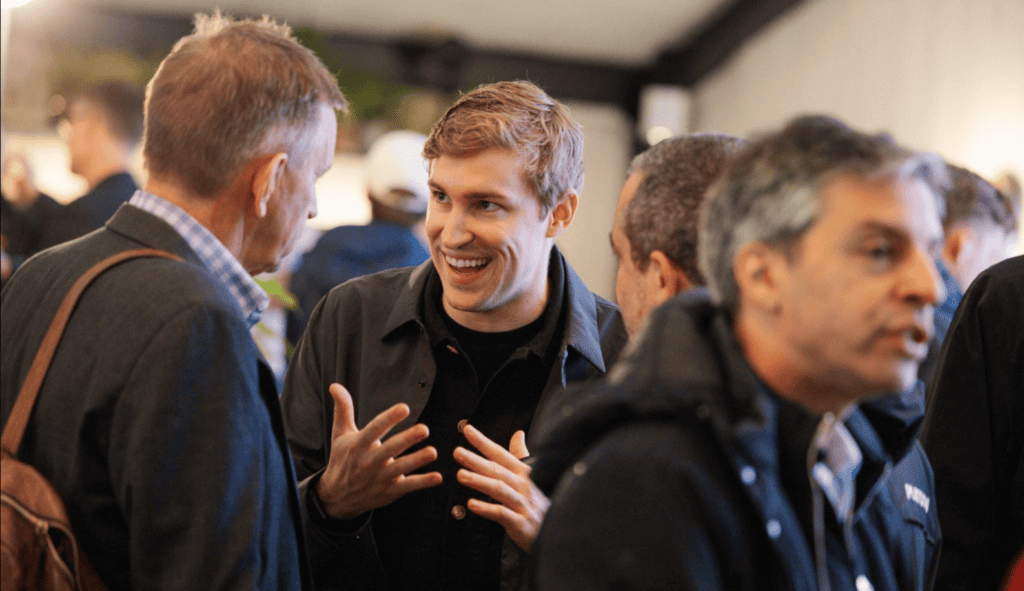
2. Europe’s Ambition Is Real. Its Infrastructure Isn’t There Yet
For a long time, European tech has carried a familiar critique: the founders aren’t ambitious enough. That felt outdated at FF Global.
The ambition and talent are there. Founders across Europe are building bigger and moving faster than five or ten years ago, and relocating to the US no longer feels like the inevitable move it once did. In some cases, US immigration uncertainty is pushing founders towards Europe instead of the Bay Area, and talent from Eastern Europe is increasingly choosing to build at home.
But ambition only gets you so far. Europe isn’t one market the way the US or China is. Physical goods move freely across it; digital services don’t. Founders scaling across Europe still hit different languages, regulations and go-to-market playbooks in every country: a fragmentation that works like a hidden tax on growth.
Capital is the other constraint. Funding rounds can take months to close in Europe when the US equivalent takes weeks (if not days!). The IPO market for tech remains thin, and pension funds allocate a fraction of what US funds put into venture, despite Europe sitting on comparable pools of savings.
That gap matters more in the AI and deep tech era, where LLM companies, compute infrastructure and physical-world AI can need hundreds of millions just to get off the ground. If Europe wants category-defining companies in those sectors, its founders need infrastructure to match: capital, energy, compute, procurement, talent mobility and better routes to liquidity.
We need the ecosystem around Europe’s founders to catch up with what they’re trying to build.
3. Longevity Has Grown Up
Longevity was one of the most human conversations at FF Global this year.
It had little to do with living forever. It was about how you live, work and perform for longer, and what founders can build around prevention, diagnostics and behaviour change.
Most longevity ‘noise’ focuses on the exotic edge of the category like peptides, experimental therapies, and biohacking. The conversation at FF Global was more focused on healthspan rather than lifespan. Sleep regularity, gut health and prioritising the right screenings over the latest supplement trend all came up more than any wearable or biohack.
For founders, longevity is becoming a serious category to build in, sitting at the intersection of healthcare, consumer behaviour, diagnostics and AI. Expect the next wave to look less like wellness brands and more like preventative healthcare infrastructure: diagnostics platforms, personalised behaviour-change tools, new insurance models, and AI products that help people understand their own health data earlier.
That shift into the mainstream was on full display at The Longevity Show, hosted by Founders Forum Group, which took over London on 26 and 27 June.
The weekend saw over 3,000 attendees, including 730+ business leaders representing 50+ countries. 70% of attendees are already planning to come back next year.
Discussions at The Longevity Show reflected exactly where the conversation at FF Global landed. The Business Stage looked at how longevity has moved into mainstream healthcare and a serious economic sector. The Women’s Health Summit looked at closing a research gap that’s gone unaddressed for too long, and the headliner stage focused on one question: what can you do today to improve your healthspan?
The question is no longer ‘how do we live longer?’ It’s ‘how do we help people live better, for longer?’
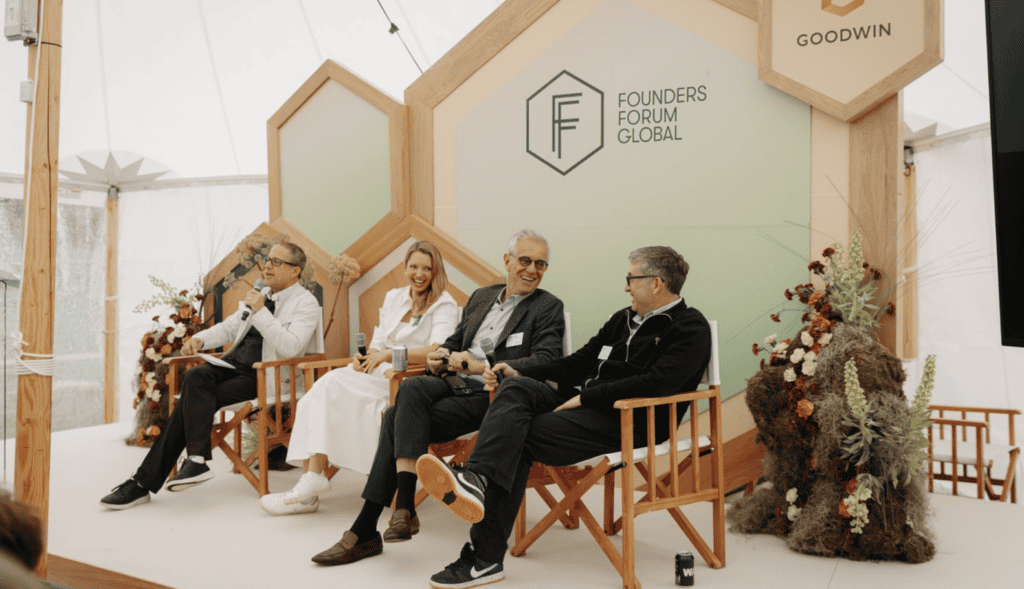
4. Founders Are Waking Up to AI Sovereignty
AI sovereignty used to sound like a government problem. At FF Global, it felt like a founder problem too.
For founders and CEOs, sovereignty comes down to practical questions: where does your data go, which models shape your decisions, whose infrastructure are you dependent on, and can your market adopt AI fast enough without creating new dependencies?
Three layers stood out. Data sovereignty: send sensitive data through overseas providers and you take on legal, commercial and strategic risk. Model sovereignty: models aren’t neutral, they carry the cultural, linguistic and regulatory assumptions baked into their training data (which matters more if you’re operating outside English-speaking, US-centric markets). And ecosystem sovereignty: not adopting AI is also a sovereignty risk. Wall yourself off in the name of control, and you might weaken your ability to compete.
The best analogy from the day was energy. Treat AI as a strategic commodity – compute, data centres, chips and model access aren’t just technical questions any more, they’re economic infrastructure. The UK’s proposed £1.1b national compute stack came up in that context as part of a broader shift towards taking sovereign AI capability seriously.
Open source got a more nuanced hearing than usual, too. Open weights aren’t the same as open source: training data is rarely included, and retraining can be expensive. Open models might reduce some data sovereignty risk, but they don’t solve questions of intent, provenance or control.
For founders, that has real implications. Customers will ask harder questions about data flows, model choice and regulatory exposure. The companies that get ahead of those questions now will build trust faster, especially in regulated sectors.
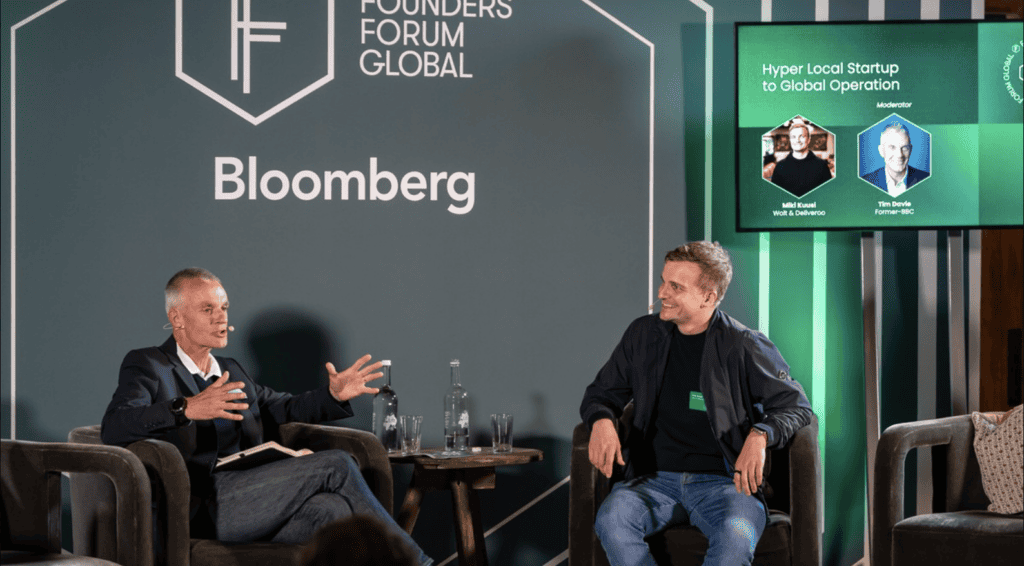
5. The Minimum Viable Company Is Shrinking
AI is changing who gets to build a company. For the first time, the path from idea to product to paying customer is opening up to people who’ve never had an engineering team, a big budget or a traditional start-up background.
AI is closing the gap between spotting the problem and building the solution. A doctor with a workflow problem. A lawyer who’s spotted a process gap. A small business owner who knows precisely where their time gets wasted.
Small businesses of five to ten people are already spending real money on AI to automate work that used to need a much bigger team, and solo-founder, AI-native companies are becoming genuinely plausible. One example discussed was a solo founder running a high-value company with AI handling large parts of the fundraise, diligence and data room process.
The hard parts of company building are still hard, but the minimum viable company is shrinking. Expect more companies started by people closer to the problem, more small teams reaching meaningful revenue, and founders who understand their customers far better than the last generation of software builders did.
What Comes Next
Taken together, these five conversations point to a bigger shift. AI isn’t just changing products, it’s changing work, infrastructure, company formation, sovereignty and the pace new markets can move at.
Europe isn’t short of ambition, but it needs the conditions to match. Longevity is moving from consumer trend to serious economic sector. Founders are thinking harder about resilience, trust and control. And the next generation of companies may be smaller, faster, and built by people who know their customers better than ever before.
Where founders converged most, across every one of these conversations, was on where durable value may sit: orchestration, trust, compounding data flywheels, context layers and physical-world applications.
That’s what made FF Global 2026 worth paying attention to.
Subscribe to Founders News to get more insights from the Founders Forum community direct to your inbox.