
 All Posts
Last updated on January 13, 2026
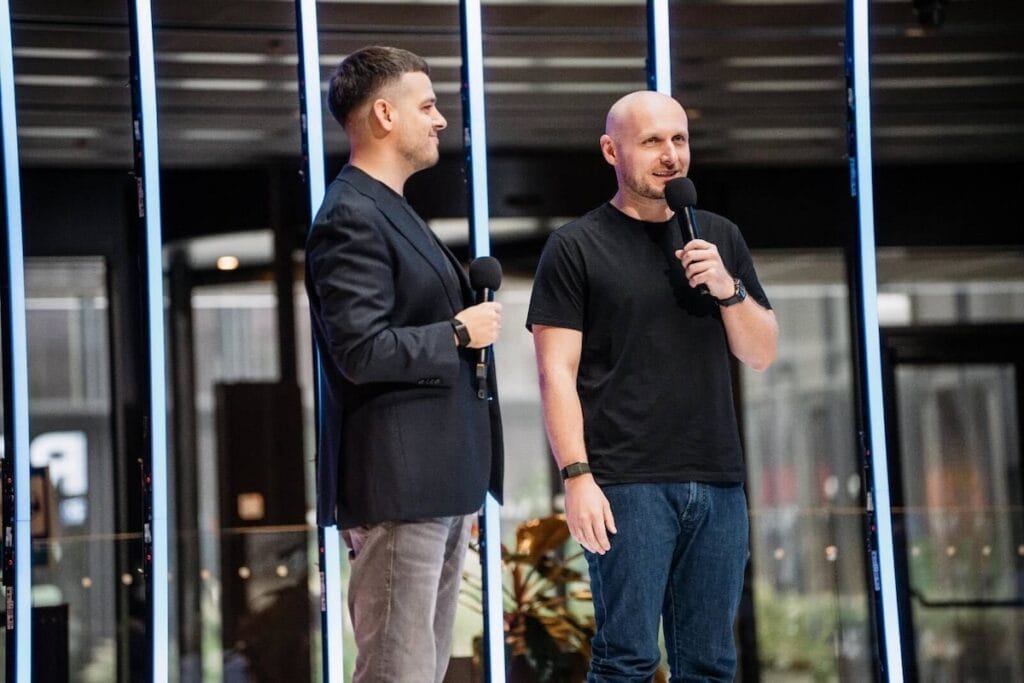
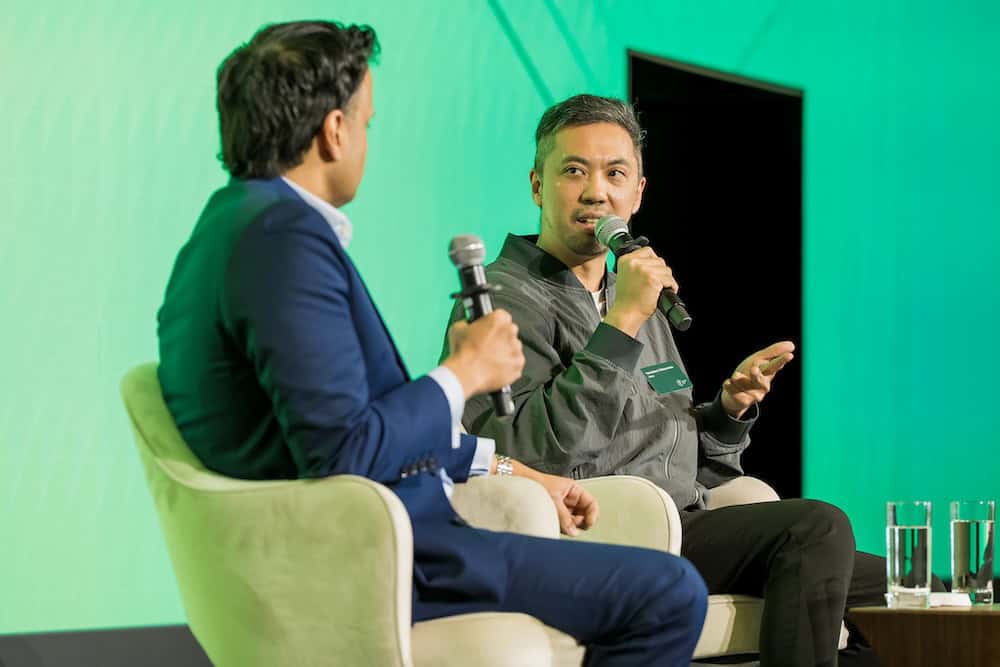
Duolingo’s Severin Hacker reveals how focus, speed, and game-inspired design helped build an education empire with over 100 million monthly active users.
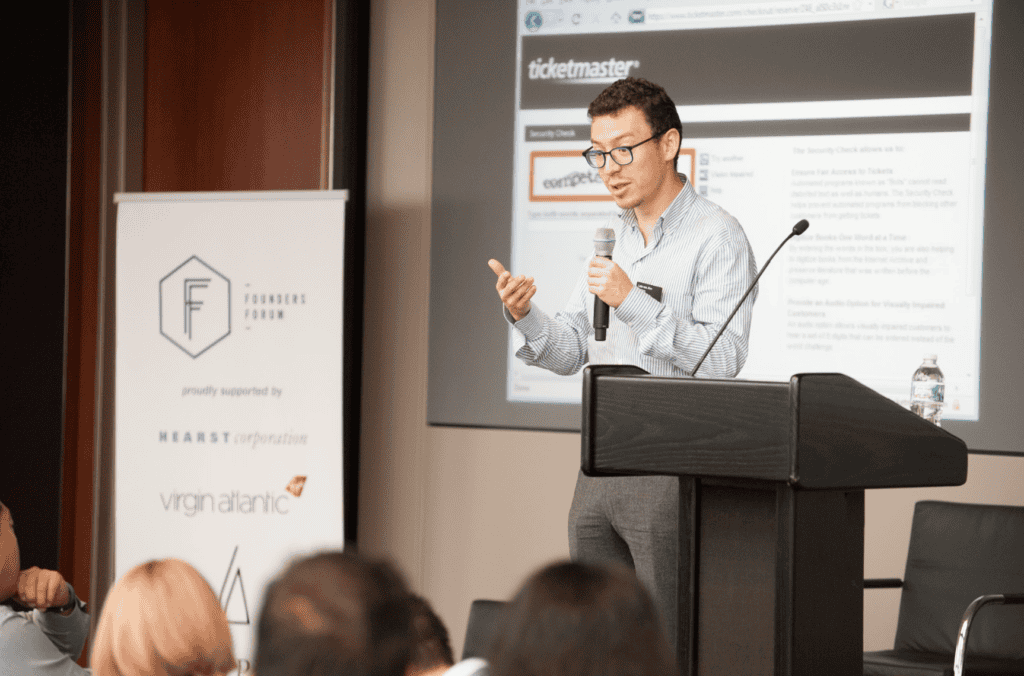
In 2011, Severin Hacker and his co-founder, Luis von Ahn, set out to build something in education. They wanted to provide top quality tuition and, crucially, make it available to everyone.
“We started with languages because it’s one of the few subjects that people learn both inside and outside of school, and that you can learn on a smartphone,” Severin explains.
They soon found that the hardest thing about learning a language is sticking to it. “Everyone else built a boring mobile version of a boring textbook,” he jokes, “we took inspiration from games like Angry Birds instead.”
With gamification at its core, Duolingo today holds the highest retention rates in the education category, and has amassed over 100m users each month.
Duolingo’s Retention Revolution
Once the pair established that retention was the real challenge, not content, they had their competitive edge.
While others focused on cramming more lessons into their apps, Severin and Luis obsessed over making people come back day after day. “We ran tens of thousands of A/B experiments over more than a decade, constantly refining what keeps users engaged,” Severin explains.
The result is that 55% of all users coming back the next day to maintain their streak.
These gamified incentives like points, badges, streaks, and friends help keep user engagement high – as people form genuine habits around the app. It also uses the Zeigarnik effect to help with memorising, which is a Russian psychological phenomenon suggesting that incomplete tasks are easier to remember.
Building a Business Model That Works
They had their gamification strategy down, but, Severin explains, “one of our biggest challenges was how we monetise whilst staying true to our mission.”
“We didn’t want to charge for content because that would exclude millions of people who need to learn for social mobility,” he says.
Duolingo started as a free English-language learning app. Co-founder Luis von Ahn was born in Guatemala and knew first-hand that learning English had the potential to be life changing – and the idea grew from there.
They settled on a subscription-based business model that offers premium features without blocking access to core learning content. It’s a model that’s both aligned with Duolingo’s mission and sustains the business. The app now hosts over 40 languages (including Navajo and Klingon), and is developing more.
The Milestones That Shaped Duolingo
Reflecting on his journey with Duolingo, there are some defining moments for Severin.
“Finding product market fit was the foundation,” he says. “Then came the sustainable business model that proved education technology could be both mission-driven and profitable.”
As Duolingo evolved into an iconic global brand, the company reached an inflection point with its IPO on the NASDAQ in July 2021 at a $4.4b valuation.
Today Duolingo has amassed over 100m monthly active users, nearly 1b downloads, and has a valuation of over $7b.
For early stage entrepreneurs looking to disrupt, Severin suggests prioritising focus and speed: “Do one thing well,” he says, “Speed of execution is your only advantage over incumbents.”
Click here to read more FF startup stories from some of the biggest names in tech.