
 All Posts
Last updated on April 1, 2026
From regenerative farming to cocoa-free chocolate, these entrepreneurs are rethinking how we grow, make and eat.
In a world caught up in AI copilots and optimisation engines, sometimes it’s important to reflect on the businesses focused on more fundamentally human problems. Few are bigger than food. How we grow it, process it and consume it is deeply tied to climate, health and resilience, yet the system itself remains fragile and extractive.
That is exactly why a generation of founders is trying to rebuild it. Just 3% of the Earth’s land ecosystems are as ecologically intact as they were half a millennium ago. With the projection of a 3 degree global temperature rise, we’re at a crisis point.
Pioneering founders are proving that profit and purpose can align to build companies that work with nature, not against it. Here, we look at three of them: Yvon Chouinard at Patagonia Provisions, Andy Cato and George Lamb behind Wildfarmed, and Sara Marquart at Planet A Foods.
Why Patagonia Backs Food Innovation
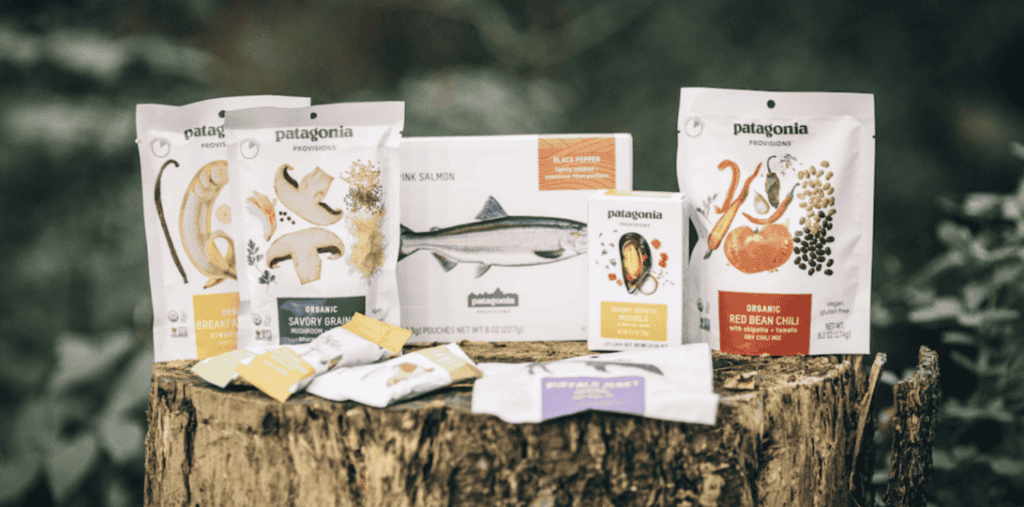
Yvon Chouinard built Patagonia into one of the world’s most recognisable sustainable brands, with an estimated $1b of clothing sold each year. But it’s a much smaller part of the business that he thinks holds the real potential: Patagonia Provisions. “People buy a jacket every few years, but they eat several times a day,” Chouinard says. “If we’re going to save our home planet, it starts with food.”
Patagonia Provisions, the food arm of outdoor clothing giant Patagonia, is built on the idea that business should be about more than profit. In 2022, Yvon Chouinard made that clear when he gave away ownership of Patagonia to a trust and nonprofit set up to help fight the climate crisis.
Patagonia first dipped its toes into food back in 1984, selling blends of ancient grains and Tibetan flours to outdoor adventurers. Turns out it was too niche, too hard to source, too ahead of its time. The company tried again in 2012, launching Patagonia Provisions to build a food business rooted in regenerative agriculture – farming that restores soil health and biodiversity rather than depleting it.
By 2022, the business had a sharp focus on tinned seafood and products made with regenerative grain, Kernza.
Mussels, sardines, mackerel and anchovies are among the most sustainable proteins in the ocean: fast to replenish, low on the food chain, and far less resource-intensive than larger species. It now claims more than 60% of the US tinned mussel market – not bad for a company still associated with fleeces.
Whilst Patagonia Provisions remains small relative to the wider Patagonia brand, its ambition is larger than revenue alone. The goal is to help prove that a better food model can work commercially.
Wildfarmed is Bridging Innovations in Agriculture
Patagonia is not alone in making that bet. In the UK, Wildfarmed has become one of the clearest examples of a startup trying to rebuild the food chain from the ground up.
Andy Cato, one half of the electronic music duo Groove Armada, co-founded Wildfarmed alongside TV presenter George Lamb and banker Edd Lees in 2018. What started with a single farm in France, where Andy had been quietly experimenting with growing wheat without pesticides or synthetic fertilisers, has grown into a supply network of more than 1,000 customers.
It works directly with farmers, bakers, chefs and retailers, helping growers transition to regenerative practices and creating demand on the other side for flour, bread, pizza dough and pantry staples produced in a way that restores soil health and biodiversity. Education has been central to that mission too, from grassroots work in farming communities to helping shape regenerative standards with DEFRA.
It has since moved from independent food circles into the mainstream – first with Marks & Spencer, then Waitrose, and now Tesco and Ocado. Its customers include Shake Shack, Nando’s, Zizzi, Jubel and Tribe. It’s also proving that regenerative farming can work at scale.
Planet A Foods Doubles Down on Sustainable Chocolate
Sara Marquart, co-founder and CTO of Planet A Foods, is also looking to fix food systems by rethinking ingredients. It produces sustainable ingredients for the food industry, starting with chocolate.
Around 70% of the world’s cocoa comes from two countries in West Africa, and its production is closely tied to deforestation. Numerous huge corporations base their entire business models on this fragile cocoa supply chain, so Planet A Foods’ response is ChoViva, a 100% cocoa-free chocolate alternative made using precision fermentation. It’s 10x more sustainable and 20% cheaper than conventional chocolate.
Sara’s goal is to scale a B2B business that can replace chocolate in mass-market confectionery by 2035. It was part of Y Combinator’s 2021 batch, with backing from the likes of Cherry Ventures and World Fund, then pitched as a Rising Star at Founders Forum in 2023. Now, it’s gone global, partnering with Barry Callebaut (the world’s largest supplier of chocolate – think Nestlé, Unilever, Hershey’s, Mars as customers) last year.
Where Food System Founders Meet
These founders recognise that fixing the food system is one of the most urgent business opportunities of our time. What connects businesses like Patagonia Provisions, Wildfarmed and Planet A Foods is the understanding that changing the food system cannot be done in isolation. It takes farmers, founders, retailers, policymakers, investors and consumers moving in the same direction.
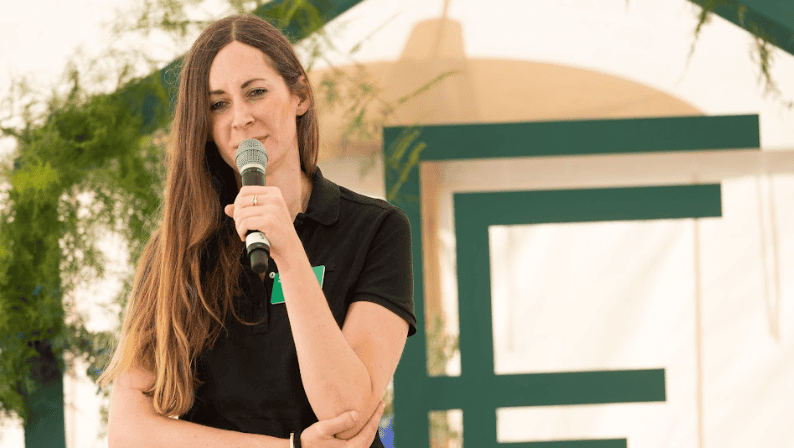
That is exactly the kind of collaboration Founders Forum is convening at Landed on 23 April – our dedicated forum on regenerative agriculture and nature restoration. Bringing together entrepreneurs, investors, farmers, corporates, policymakers and creatives, Landed is designed to break silos and accelerate the ideas shaping the future of food and land use.
If these founders represent different ways into a better food system – through grain, through ingredients, through regenerative supply chains – Landed is where that future gets pushed forward.
Click here to register your interest in Landed 2026.