
 All Posts
Last updated on July 29, 2026
Alex Zhavoronkov, Founder and CEO of Insilico Medicine, has spent over a decade using generative AI to discover drugs faster and cheaper than any traditional lab. Now, with a landmark Hong Kong IPO behind him and a mission to decode the biology of ageing, he’s setting his sights on something far bigger: pharmaceutical superintelligence.
Back in 2015, Alex Zhavoronkov walked onto a stage at the NVIDIA GTC conference and asked the audience: “Can NVIDIA cure ageing?”
It was a challenge to the tech world, and a call to apply the era’s most powerful computing capabilities to one of humanity’s oldest problems. More than a decade on, Alex is still asking the same question.
Alex is the founder and CEO of Insilico Medicine, a clinical-stage biotech company that uses generative AI to discover and develop drugs faster, cheaper, and with a higher likelihood of success than traditional methods. Founded in 2014, Insilico went public on the Hong Kong Stock Exchange in December last year, in what became the largest biotech IPO in Hong Kong that year, raising HKD 2.277 billion in a massively oversubscribed listing backed by cornerstone investors including Lilly, Tencent, and Temasek.
The company now operates across seven countries, with sites in Boston, Montreal, Abu Dhabi, Hong Kong, Shanghai, Yixing, and Taipei. More than 40 pharmaceutical companies use its Pharma.AI platform, and it has raised over $400 million in funding. It has built a pipeline of over 40 programmes with 31 developmental candidates, spanning fibrosis, oncology, immunology, and ageing-related disease, with 13 currently in clinical stages.
‘We Don’t Consider Most Other Companies Real Competitors’
“The true competitive advantage in this industry is the ability to deliver real drugs into clinical trials,” Alex says. The logic is hard to argue with, and Insilico has the clinical pipeline to prove their dominance in the drug discovery game.
Where traditional early-stage drug R&D typically takes an average of 4.5 years, Insilico has reduced that timeline to 12-18 months across more than 20 in-house programmes between 2021 and 2024.
The standout example is Rentosertib (INS018_055), the first generative AI-designed drug for an AI-discovered target (TNIK), targeting idiopathic pulmonary fibrosis (IPF), a terminal lung disease with no cure. Insilico completed the early discovery phase in just 18 months, identifying the preclinical candidate after screening only 78 molecules.
The end-to-end discovery journey, from target identification to clinical studies, shows promising safety data and is clearly hugely efficient. It’s what the industry is calling the first clinical proof-of-concept milestone in AI drug discovery.
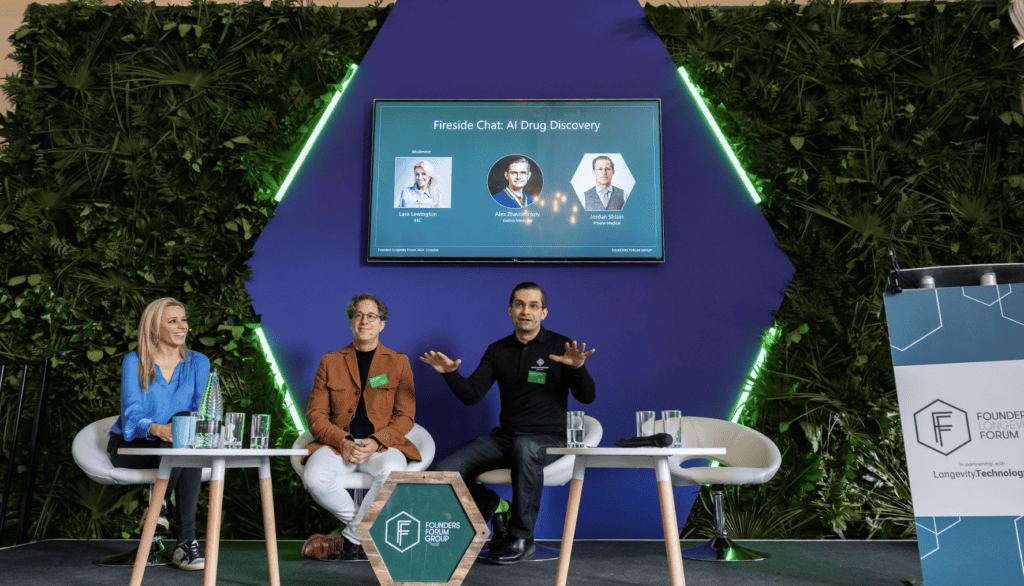
The BTS of AI drug discovery
Alex explains the beginning of the process as “launching a rocket into orbit”. You are essentially taking the drug to “what we call the ‘developmental candidate stage’”. You have to do this multiple times to show that you consistently can, and across diverse sets of molecules and diseases. “Then you need to demonstrate you can go to the moon, launch those drugs into clinical trials and show they’re safe and efficacious.”
At the same time, he says, you have to keep building the next generation of platform. In Insilico’s case, that means its Pharma.AI suite, an integrated end-to-end system spanning biology, generative chemistry, and clinical development.
This is now made up of programmes such as PandaOmics for target discovery, Generative Chemistry for novel molecule generation, and inClinico for clinical trial design, as well as and its Life Star automated laboratories. Life Star 1, the industry’s first fully automated biology lab built by an AI pharmaceutical company, opened in January 2023 at Suzhou’s BioBAY Industrial Park, performing target discovery, compound screening, and precision medicine generation. Life Star 2, with enhanced parallel processing capabilities, followed in September 2025.
The Pharmaceutical Superintelligence
The next frontier, as Alex describes it, is the most ambitious yet: pharmaceutical superintelligence. It is working on creating a highly capable, multi-modal model that can perform many drug discovery and development tasks that exceed human ability.
“We use the data and experience we got from one generation to develop the next, and vice versa,” Alex explains. “That’s our secret sauce.”
That focus has intensified in 2026. In May, Insilico announced a multi-million-dollar collaboration with Human Life Foundation Models (HLFM), a spinoff of Human Longevity, Inc, to co-develop what both companies are calling the first large-scale AI foundation model dedicated to longevity science.
Together, they will build a super-intelligence AI capable of breaking down the biological mechanisms of ageing to enable a more predictive healthcare system. The global longevity market is currently valued at approximately $5.3 trillion and is on track to reach $8 trillion by 2030, according to analysis by UBS.
And it has always been at the centre of Insilico’s mission. “Whatever we touch, in one way or another, we try to target the basic biology of human ageing,” Alex says.
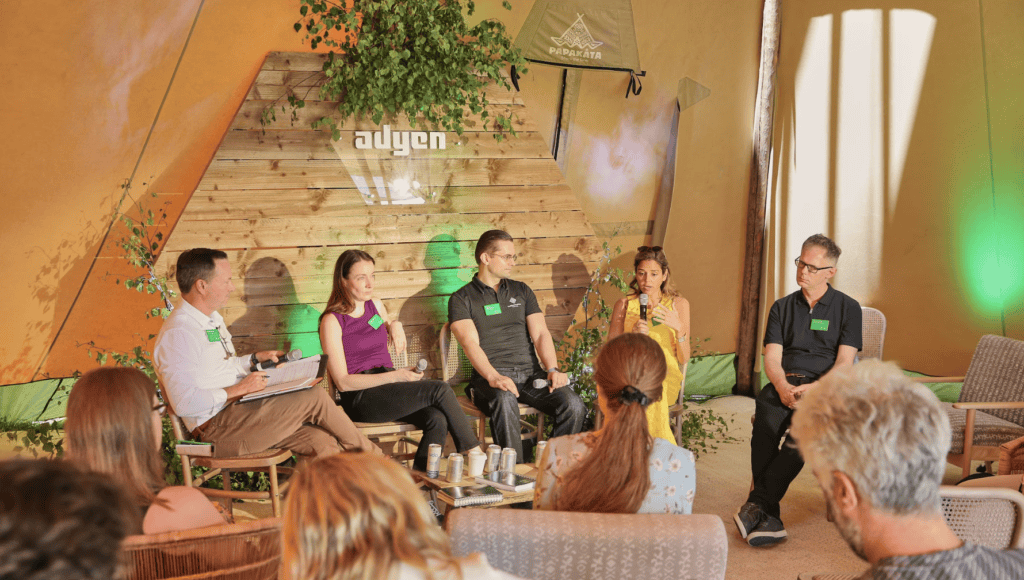
Insilico Medicine Moonshots
Alex attended his first Founders Forum in 2017. “We have never refused an invitation when we got one,” he says, “because we realise what you guys have built.”
The value of bringing ambitious people together, sharing knowledge, and thinking beyond local ecosystems has led Alex to co-organise the Ageing Research and Drug Discovery meeting in Copenhagen, one of the largest events in the world dedicated to ageing science.
AI-powered drug discovery can be the ultimate accelerant for human health. Alex has spent over a decade proving it’s possible, perhaps inevitable. “For now, we need to progress more drugs into the clinic and launch more rockets into space,” he says.
Click here to check out more stories from our Founders Forum community.