
 All Posts
Last updated on March 6, 2026
Women founders in the FF Community don’t wait for permission. From broken healthcare to legacy banking, these four women built world-changing companies in environments designed to resist them.
In 2025, just 2% of global VC deployment went to all-women founding teams. That number has barely moved in 30 years. And yet, women-led companies generate twice as much revenue per dollar invested compared with all-male teams.
Founders Forum has supported amazing women founders for the last twenty years, from our EQL:HER mission to amplify female voices in tech, to our curated networking dinners with Jimmy Choo & HSBC. We’ve also witnessed some incredible Rising Stars in our network such as Classpass’ Payal Kadakla who pitched at FF in 2015 and achieved unicorn status in 2021, as well as Bumble’s Whitney Wolfe Herd who pitched at FF in 2017, and listed on the NASDAQ in 2021 at a $14b valuation.
The women in the FF Community know this gap all too well. We’re spotlighting four female entrepreneurs who raised capital in categories investors typically shy away from – underserved healthcare, emerging market ecommerce, challenger banking, and teenage girls’ wellbeing.
They did it by rebuilding broken systems and pioneering new ideas without taking no for an answer. Here’s how.
Women Entrepreneurs Transforming Broken Infrastructure
The US spends twice as much on healthcare as other high-income nations – yet consistently ranks last in overall health system performance. 92% of people enrolled in both Medicare and Medicaid experience delays or barriers to care, from confusion about coverage to difficulty accessing services.
Toyin Ajayi, Co-Founder and CEO of Cityblock Health, is one of the women founders tackling systemic failure at its root. A physician who learned early in her career – in Sierra Leone and later in Boston – that better hospitals mean nothing if people don’t trust the system. She launched Cityblock in 2017 to integrate primary care, mental health, and social services, delivered in communities and at home, for some of the most vulnerable patients in the US.
Cityblock now serves more than 100,000 members across multiple states, has raised close to $900m, and reached a $5.7b valuation.
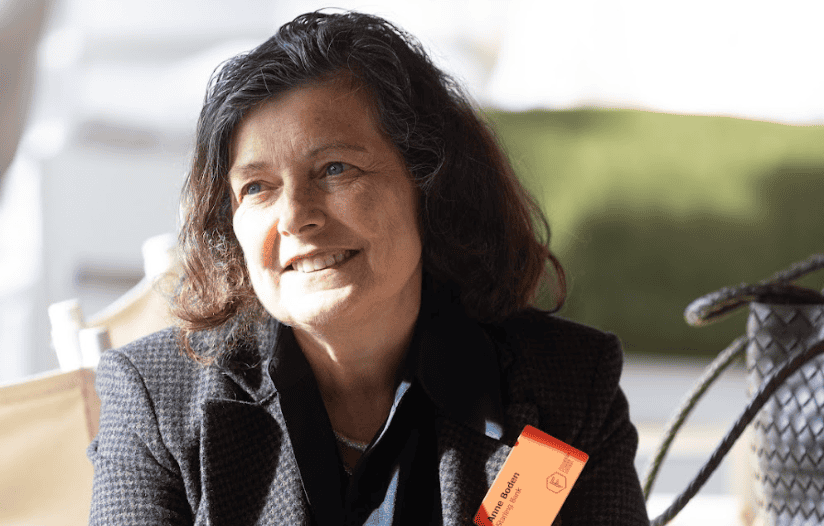
Anne Boden faced a different kind of broken system. UK finance remains structurally unequal: women earn about 22% less than men on average, with women at the top five listed banks taking home roughly 67 pence for every pound men earn. Against that backdrop, Anne founded Starling Bank in 2014 – becoming the first woman to found a British bank – after watching legacy banks emerge from the financial crisis ‘unchanged‘: slow, branch-bound, and hostile to customers.
Starling became the first challenger bank to achieve three consecutive years of profitability, reporting pre-tax profits of £301.1m by 2024 and serving 4.2 million customers, making it one of the UK’s most successful women-owned businesses. It has raised over $1.1b.
Female Founders Pioneering in New Markets
Jas Schembri-Stothart is building the world’s first digital wellbeing companion for teenage girls and non-binary young people: Luna.
When Jas and her Co-Founder Jo Goodall ran focus groups at their old schools, teenagers told them they were getting health information from TikTok – and believing things like bee pollen makes your breasts grow. They knew there needed to be a trusted alternative: expert-verified content on periods, mental health, body image, and relationships, built for 11 to 18 year olds. In its first year, Luna answered over 36,000 queries – the sheer scale of unmet need.
It now has over 160,000 members in 170 countries. After four weeks on the app, 84% of teens reported their mental health as ‘going well’ or ‘thriving,’ up from 57%. Luna was a finalist at TechCrunch Disrupt’s Startup Battlefield in 2024, and has raised £1.2m.
Demet Mutlu also took advantage of an overlooked ecosystem. While Western VCs focused on the US and China, Turkey’s ecommerce potential was largely ignored. Demet dropped out of Harvard Business School in 2009, bootstrapped $300,000, and launched Trendyol from her dining table. It grew from a single fashion site to Turkey’s leading ecommerce ‘super app.’
Within 16 months, Trendyol reached $150m in sales. It later became Turkey’s first unicorn, then its first decacorn – valued at $16.5b with over 30 million customers across 35 countries.

The Funding Gap for Women Founders
The funding picture was tough for all four founders.
Demet secured backing from Alibaba, Tiger Global, and SoftBank in a market most Western VCs wouldn’t touch. Toyin raised nearly $1b for a company serving historically underfunded Medicaid populations. Jas pitched a health app for teenage girls – a category at the intersection of two funding blind spots.
And Anne raised money as a 50-something Welsh woman in a sector dominated by young men. She spoke to over 300 investors before securing funding for Starling. With a computer science background and 30 years in banking, she thought it would be far easier.
She described the pitching process to Diginomica: “You’ll be talking to men in their twenties and thirties, in chinos, and some of them will have beards. All of them will wear gilets. You’re sitting there on the other side of the table as they’re thinking, ‘this woman is not like me.'”
From Women-Led Startups to Market-Defining Institutions
Anne stepped down as Starling CEO in 2023 to pursue a new AI venture, chaired the UK Government’s Women-Led High-Growth Enterprise Taskforce, and published Female Founders’ Playbook. “I’m going to try to find five companies over the next five years,” she told Sifted, “and hope that at least one of them can turn into a £10b company.”
Demet built Turkey’s first decacorn – and previously co-founded Peak Games, acquired by Zynga for $1.8b. Her impact trickles down: Trendyol’s ‘Future is Women’ programme has kickstarted over 50,000 female-led ecommerce businesses.
Toyin now sits on the board of Evolent Health, serves on the Congressional Budget Office’s Health Panel, and co-founded Coalition Partners, where she invests in and mentors early-stage entrepreneurs.
And Jas is building the trusted health companion that an entire generation of teenagers never had.

Over the years, they’ve joined the FF stages and conversations to dissect the realities of female entrepreneurship. Anne and Toyin joined us at FF Global just last year, and now they’re opening doors for the women beneath them. These women are building institutions, hiring thousands, and shaping markets. They didn’t break barriers. They became the benchmark.
Subscribe to Founders News for more stories from the world’s most impactful founders.