 All Posts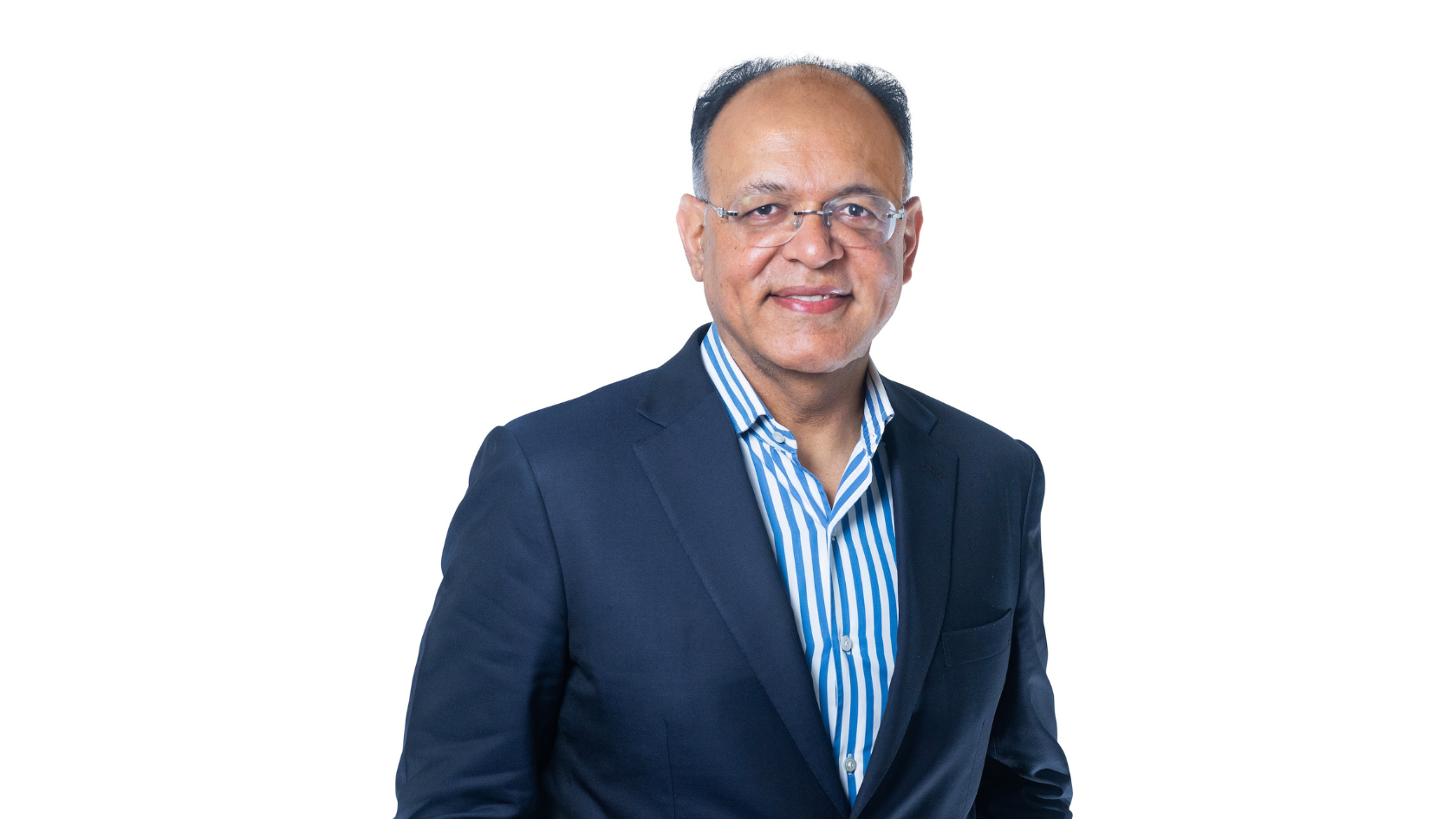
Last updated on October 19, 2026
Following conversations with Asia’s leading founders, McKinsey’s Asia Chairman, Gautam Kumra, reveals the three key behaviours that most challenge conventional Western founder thinking.
Gautam Kumra has spent decades working alongside some of Asia’s most influential business leaders. As Chairman of McKinsey’s offices in Asia and co-author of the new book, Shapers and Founders, he has had a front-row seat to how the region’s most exceptional founder-CEOs build, scale and make decisions.
What sets them apart isn’t simply purpose; plenty of founders around the world are deeply mission-driven. It’s how mission works alongside commercial return as a genuine decision-making filter, shaping what gets funded, which opportunities get pursued and how long a company is willing to wait.
Across countries, industries and generations, Gautam says that mindset gives rise to six behaviours that consistently set Asia’s best founders apart, each brought to life by one of the region’s standout founders. He explore three of those here:
1. “Asian founder-CEOs are driven by a mission built on community interest, not personal ambition alone.”
A defining feature of Asia’s most extraordinary founder-CEOs is how deeply their leadership is shaped by the philosophical traditions of their home cultures and how those traditions orient them toward collective purpose.
Confucianism, which remains deeply influential across China, Korea, Japan, Vietnam and Singapore, sees companies as communities rather than machines, with a leader’s role defined by benevolence over fear and righteousness over expedience.
Founder Spotlight: Mukesh Ambani, Reliance Industries
When Mukesh Ambani, the chairman and managing director at Reliance Industries, committed Reliance to building Jio, the starting point wasn’t “how do we build a profitable telecoms business.” Instead, it was to digitize India. Reliance committed roughly US$9 billion to build 4G infrastructure from scratch (90,000 towers, 250,000+ km of fiber), in a market where analysts initially valued the venture near-zero.
Ambani told his own board that even if Jio failed financially, “it will still be the best thing we’ve done for India,” meaning the social and national justification for the bet stood independently of its commercial return. Today, Jio is India’s largest mobile network operator with more than 500 million subscribers.
2. Asian founder-CEOs innovate with both the big “I” and the small “i” – simultaneously.
The conventional growth playbook treats incremental improvement and transformational innovation as a sequence: optimise the core, then disrupt. Asia’s most successful founder-CEOs reject that binary. They pursue both tracks simultaneously and permanently.
Founder Spotlight: Akio Nitori, Nitori Holdings
Akio Nitori, founder of the Japanese furniture and home goods retailer Nitori Holdings, at 81 still frames his company’s entire operating philosophy around continuous, unemotional refinement.
“Every year we aim to improve everything: denying the status quo, making products better from the moment they are created,” he says. Rather than waiting for a single breakthrough, Nitori built a systematic process for it, deliberately soliciting “customer dissatisfaction or inconvenience” and gathering feedback from junior employees to feed a steady stream of small product and process fixes, even as the company scaled to over 1,000 stores.
3. Asian founder-CEOs are bold but bounded – they make large bets only after calculating the worst case.
Asian founder-led companies’ capex-to-revenue ratio runs approximately 40% above the global average, and they engage in roughly 20% more M&A deals than non-founder-led Asian peers. Beneath the scale of their bets lies a rigorous commitment to downside thinking: the first question is never how much can be won, but what the worst case looks like and whether the organisation could survive it.
For example, when United Overseas Bank’s Wee Ee Cheong acquired four of Citibank’s Asian consumer businesses mid-pandemic, analysts were sceptical and markets were volatile. His response was unequivocal: “You cannot have a short-term view. If you are too short term in nature, you can’t move.” The worst-case assessment was clear; the long-term destination had not changed. That sequencing – survivability before opportunity – is what separates a bold bet from a reckless one.
Founder Spotlight: Ho Hung Anh, Techcombank
Ho Hung Anh, the Chairman of Vietnam’s Techcombank, describes risk management as an aid to identify the space he can freely act within. Using scenarios to assess resilience, he questions “where if we invest in a new business and it fails and we lose all the money, it still doesn’t hurt us too much.”
When the opportunity arose for Techcombank to acquire the property developer Masterise, the test he applied was what the institution and its stakeholders could absorb: Masterise needed a fundraising backstop the bank couldn’t provide. Ho’s approach is built in both caution and freedom, a context within which risk may be taken without any existential fear. Techcombank has since compounded pretax profit at 19% a year between 2018 and 2025.
What founders everywhere can take from this
The lesson isn’t that founders elsewhere should copy an “Asian” model of leadership. It’s that a strong sense of mission can shape far more than culture or purpose statements: it can influence how companies make decisions, absorb uncertainty and think about the long term.
That matters as founders navigate everything from AI and shifting supply chains to ageing workforces and geopolitical change. The companies that endure won’t necessarily be those that react fastest to every disruption, but those that adapt with purpose – strengthening trust, amplifying people and solving problems that genuinely matter to the communities they serve.
For more on the leadership playbook behind some of Asia’s highest-performing founder-led companies, read Shapers and Founders: The Untold Stories of Asia’s Extraordinary Owner-CEOs.
This article is sponsored by McKinsey & Company.